
Most local businesses believe that showing up in Google Maps is automatic. They create a profile, add their address, and assume customers will find them. But months pass, competitors dominate the top three results, and phone calls stay low.
If you want to rank higher in Google Maps, you must understand how the Map Pack algorithm works and what signals actually influence visibility. This guide breaks down the real ranking factors and gives you a practical system that works in competitive markets worldwide.
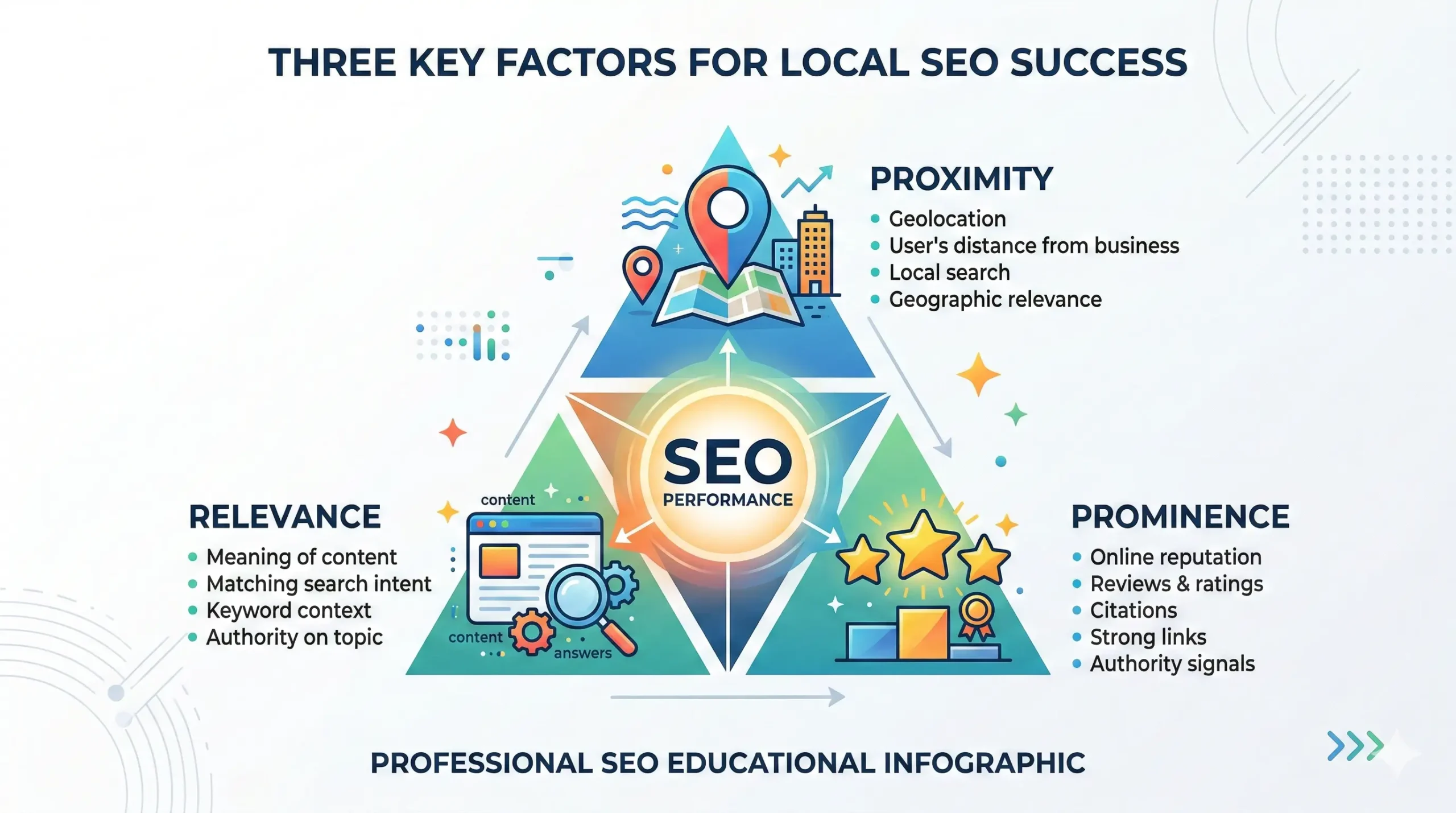
Google evaluates three core pillars when deciding Map Pack rankings. These pillars are proximity, prominence, and relevance. When these elements align correctly, your visibility increases, your calls grow, and your local authority strengthens.
If you want to rank higher on Google Maps, you need a structured approach rather than hoping for visibility to happen automatically.
How Google Maps Ranking Actually Works
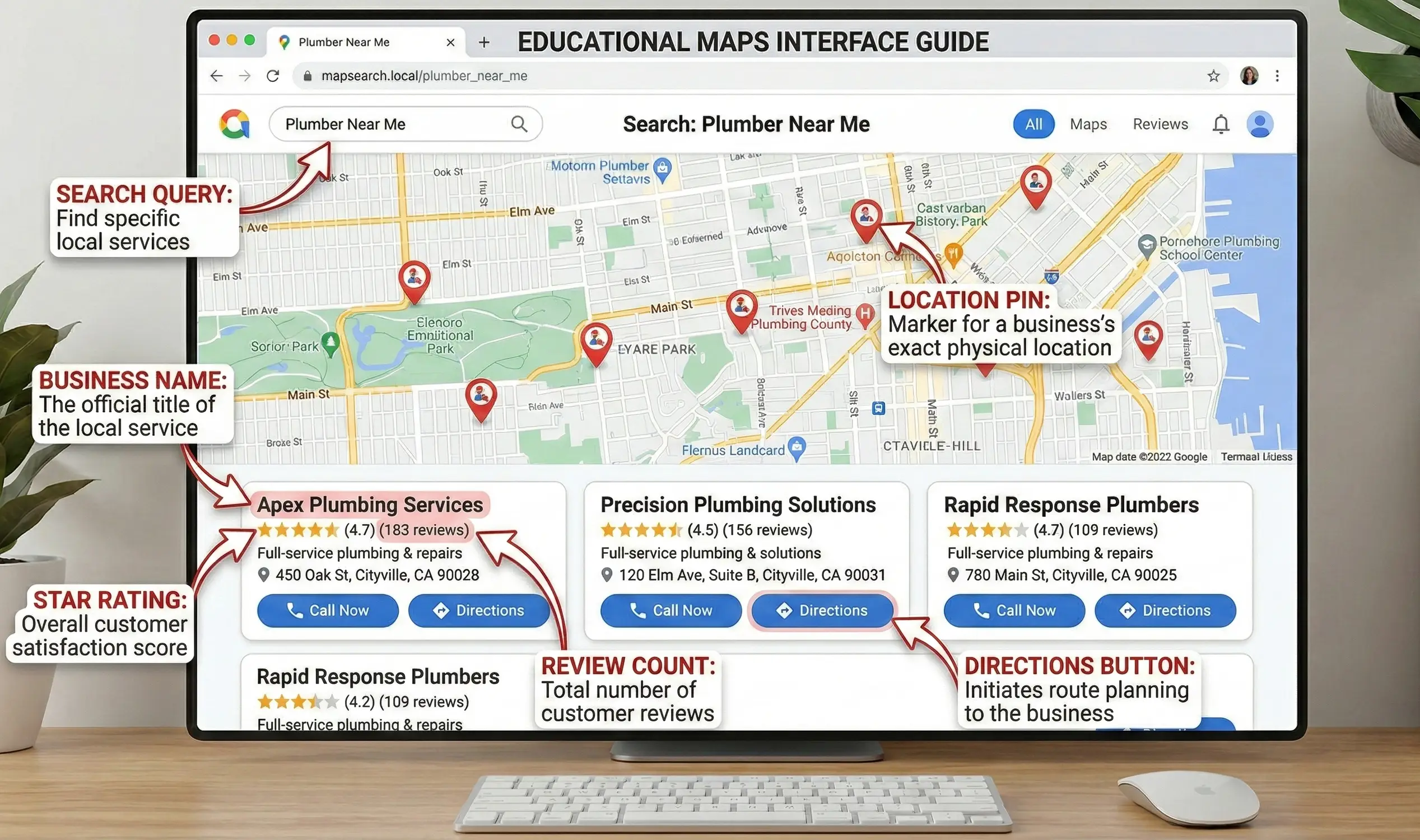
The Map Pack refers to the three local business listings that appear under the map when someone searches for a local service. These listings often receive the majority of clicks and calls. Being outside the top three drastically reduces exposure. Understanding this system is essential if your goal is to consistently rank higher on Google Maps in competitive areas.
Google selects these businesses based on signals pulled from your Google Business Profile, your website, your reviews, and broader web authority. The algorithm constantly updates, but its foundation remains consistent across industries and countries.
Organic SEO and Maps SEO are not identical. A business may rank first organically but not appear in the Map Pack. That is because Maps results rely heavily on local intent, location signals, review activity, and profile optimization rather than traditional backlink volume alone. Businesses that understand this difference are far more likely to rank higher on Google Maps than those relying only on traditional SEO tactics.
The 3 Core Ranking Factors
Proximity
Proximity refers to how close your business is to the person searching. If someone searches for a service while standing in a city center, Google prioritizes businesses nearby.
You cannot manipulate proximity directly. You cannot fake an address without risk. Businesses that attempt to use virtual offices or false locations often get suspended. Instead, you must strengthen other signals so you appear more often within your service radius.
Service area businesses face unique challenges. If you visit customers rather than operate from a storefront, your ranking may vary more widely across different parts of a city. This makes tracking performance by postcode or zip code critical. While you cannot directly control distance, strengthening the other pillars helps you rank higher on Google Maps across a wider service radius.
Relevance
Relevance measures how closely your business matches what someone is searching for. If your primary category does not align with your core service, your visibility will drop.
Your business category, services list, website content, and location pages must clearly match your target keywords. For example, if you are a plumbing company but select a general contractor category, Google may not consider you the best match.
On-page signals matter. Your homepage should reinforce your primary service and city. Supporting pages should target additional locations or services. This alignment strengthens the relevance pillar. Category alignment is one of the fastest ways to rank higher on Google Maps when visibility is low.
Prominence
Prominence reflects how established and trusted your business appears online. This includes reviews, citations, local backlinks, press mentions, and overall brand recognition.
Review quantity matters, but quality and consistency matter more. A steady flow of authentic reviews sends trust signals. Local citations that match your business name, address, and phone number reinforce legitimacy. Building authority over time is critical if you want to rank higher on Google Maps and maintain those top positions.
Below is a simplified overview of how the pillars work together.
| Ranking Factor | What It Means | How to Improve |
| Proximity | Distance from searcher | Choose the correct service area and optimize the surrounding signals |
| Relevance | Match between search and business | Align categories, services, and website content |
| Prominence | Authority and trust signals | Generate reviews, build citations, earn local links |
Step-by-Step Strategy to Improve Map Pack Visibility
Step 1: Fully Optimize Your Google Business Profile
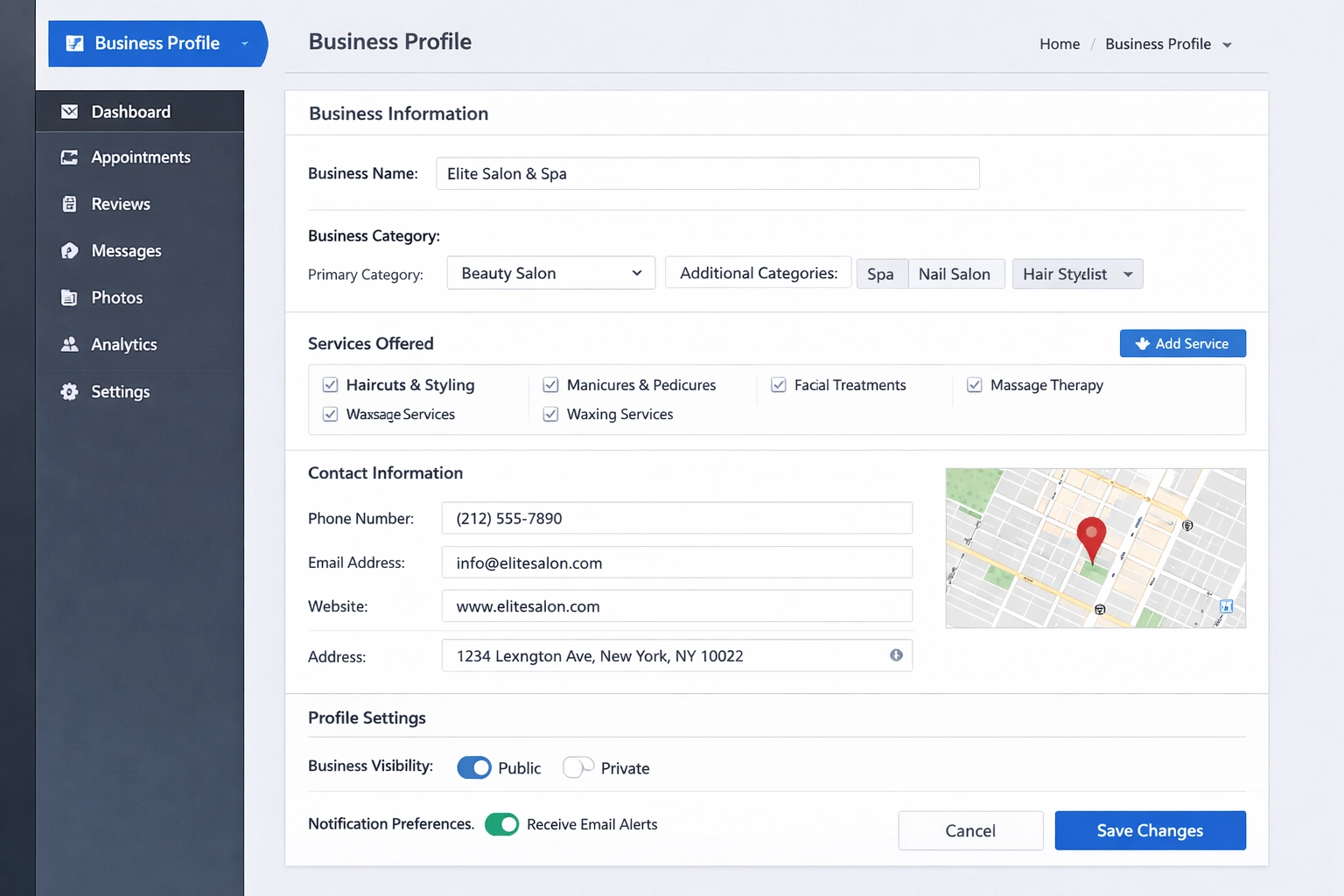
Your Google Business Profile is the foundation of local visibility. Many businesses complete only 50 percent of available fields. That leaves ranking opportunities unused.
Start by selecting the most accurate primary category. Research competitors that consistently appear in top positions and review their categories. Your primary category should reflect your core revenue service. A fully optimized profile dramatically increases your chances of ranking higher on Google Maps compared to partially completed listings.
Add secondary categories carefully. Avoid selecting irrelevant categories just to appear in more searches. This can dilute relevance signals.
Your services and products section should describe offerings clearly and naturally. Include keywords without stuffing. Describe real benefits and outcomes.
Your business description should explain who you help, where you operate, and what makes you different. Add local keywords naturally.
Upload high-quality photos regularly. Geo-tagged images showing real work, team members, and locations increase engagement and trust.
Publish weekly posts that answer common questions, highlight offers, or showcase completed projects. Fresh activity shows Google that your profile is active.
If you want a professional audit of your profile setup, schedule a Free Audit today or Call Now 01703689900.
Step 2 Optimize for Relevance Signals
Your website must reinforce your Google Business Profile.
Ensure your homepage clearly states your primary service and target location. Add city-specific landing pages if you serve multiple areas. Each page should contain unique content tailored to that location.
Embed your Google Map on your contact page. This helps reinforce geographic alignment.
Implement local business schema markup to provide structured data about your company. Schema helps search engines understand your location, services, and contact details.
Maintain consistent name, address, and phone number across directories. Even small variations can weaken trust signals. Strong on-page alignment makes it significantly easier to rank higher on Google Maps for your primary service keywords.
Step 3: Build Prominence with Reviews
Reviews influence both ranking and conversion.
There is no universal number of reviews required. Instead, analyze competitors in your city. If top businesses average 150 reviews, that becomes your benchmark.
Focus on review velocity. A steady flow of recent reviews looks more natural than a sudden burst.
Respond to every review professionally. Include service and location keywords naturally in responses. This strengthens relevance signals.
Create a simple review request system. Send follow-up emails or SMS after service completion. Make it easy for customers to leave feedback. Consistent review growth sends powerful trust signals that help businesses rank higher in Google Maps over time.
Step 4: Build Local Authority Through Citations and Links
Citations are mentions of your business across directories. Submit to high authority platforms such as Yelp, Bing Places, and industry-specific directories.
Seek local sponsorship opportunities. Community events, charities, and local partnerships often provide backlinks that increase prominence.
Public relations efforts also help. Being featured in local news or blogs improves trust and brand visibility. Local backlinks and accurate citations strengthen your authority and help you rank higher in Google Maps in competitive markets.
Step 5: Improve Behavioral Signals
Google tracks how users interact with your listing.
Encourage customers to click for directions. Add clear call-to-action messaging in your profile.
Optimize your listing headline and photos to increase click-through rates.
Use the Q and A section proactively. Add common questions and answer them thoroughly. Improved engagement metrics can positively influence your ability to rank higher in Google Maps compared to inactive listings.
How to Track Your Google Maps Rankings
Standard SEO tools often track organic rankings, not map grid performance.
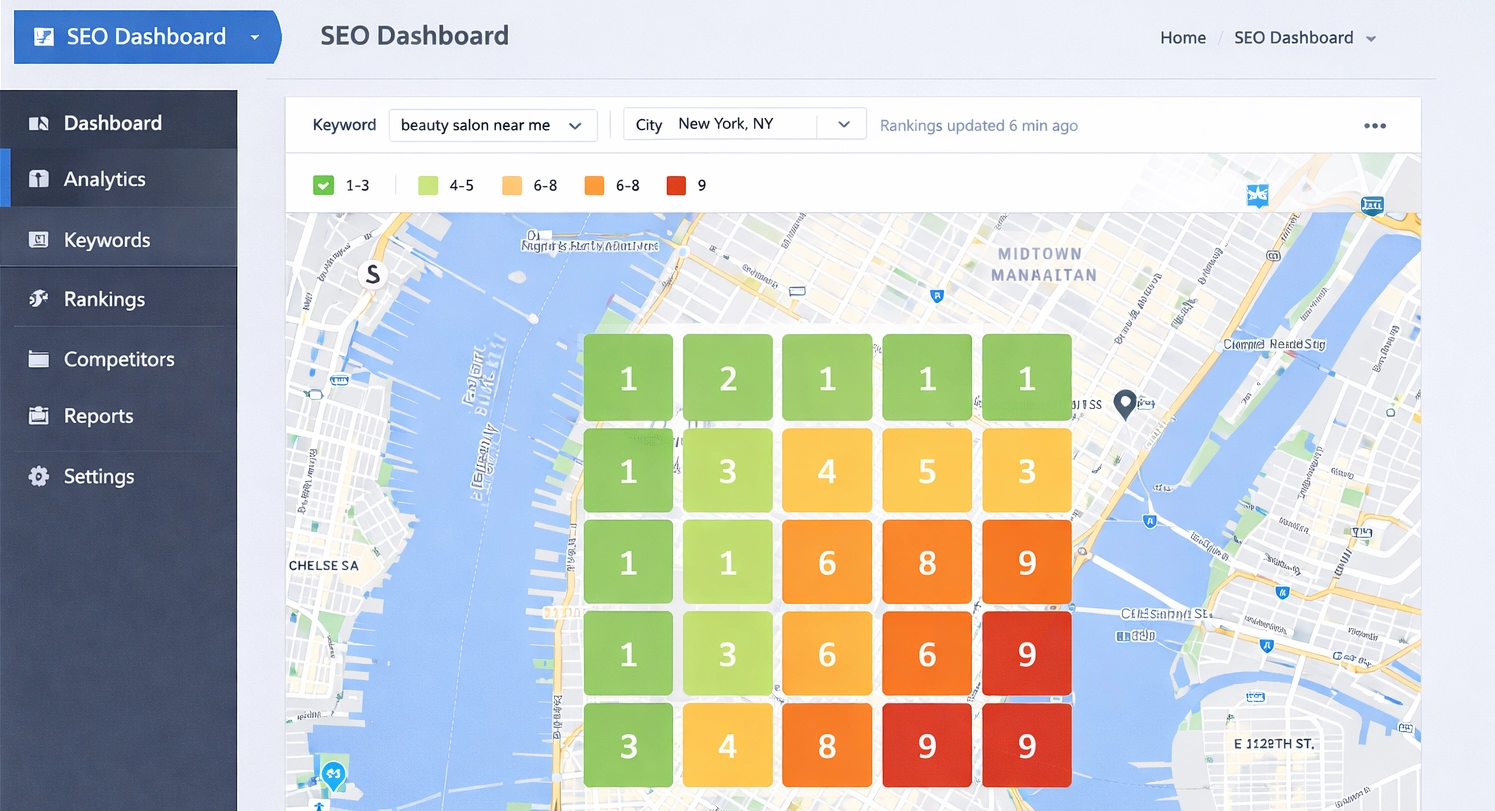
Use local grid tracking tools that measure visibility across different areas within a city. Rankings can vary dramatically even within a few miles.
Track key performance indicators such as
- Profile views
- Calls
- Website clicks
- Direction requests
Ultimately, calls and booked jobs matter more than rank position alone. Monitoring grid performance allows you to identify which areas need improvement to rank higher in Google Maps city-wide.
Common Mistakes That Kill Map Pack Rankings
Many businesses fail to rank higher in Google Maps simply because they overlook basic optimization fundamentals. Choosing the wrong category is one of the most damaging mistakes. Your primary category should always reflect your main revenue service.
Keyword stuffing your business name may provide temporary gains, but it often results in suspension.
Buying fake reviews risks permanent removal from Google.
Inconsistent name, address, and phone details across directories weaken trust signals.
Ignoring negative reviews damages both ranking and conversions.
How Long Does It Take to Improve Visibility
New profiles may take three to six months to gain traction. Established businesses can see improvements faster if optimization gaps are fixed.
Highly competitive industries require consistent effort across all ranking pillars. Lower competition markets may respond within weeks.
Patience combined with systematic execution produces sustainable results.
When to Get Professional Help
If your competitors dominate despite strong reviews, a deeper strategy may be required.
If your profile was suspended or ranking stagnated after initial growth, expert intervention may help.
Professional audits identify hidden issues such as category conflicts, duplicate listings, or citation inconsistencies.
Call Now 01703689900 to speak with our team or Schedule a Free Audit today.
Get a Free Google Business Profile Audit
Our audit includes
- Category analysis
- Competitor comparison
- Review gap analysis
- Ranking heatmap snapshot
- Optimization checklist
This gives you a clear action plan tailored to your city and industry.
Request Your Free Audit Today.
Frequently Asked Questions
What is the fastest way to rank higher in Google Maps?
The fastest way to rank higher in Google Maps is to fix category alignment, optimize your profile completely, and implement a structured review generation system.
How do I rank first on Google Maps?
You must optimize your profile, build consistent reviews, strengthen website relevance, and earn local authority signals. There is no single shortcut.
Does proximity matter more than reviews?
Proximity is important, but strong prominence and relevance can help you appear more frequently within your service radius.
Can I rank in multiple cities?
Yes, but you need dedicated location pages, strong relevance signals, and consistent citation data for each area.
How many reviews do I need to rank?
You should aim to meet or exceed the average review count of the top three competitors in your target city.